


How to Cover High Profile Live Events on Social Media
 3 Minutes Read

One of the biggest misconceptions we have observed about covering an intense summit is that live coverage means either posting photos from the venue or a live feed. It isn’t.
A three-day risk management conclave or an industry trends report launch can generate hundreds of quotable moments, dozens of headline-worthy statistics, and a handful of lines that could anchor a company's narrative for the next quarter. Most of it disappears or fizzles out the moment the session ends.
Achieving a tangible social media marketing ROI from a high-profile event is a discipline of its own. It needs a strategic framework that aligns overarching brand narratives with rapid, real-time insights.
Pre-event build up vs the day of event
Before exploring how to promote an event, you must first define what event marketing is in your specific context. Yes, it is about driving traffic and footfall; but they must also think of extending the lifespan of the summit.
Before the summit begins, review the session documents, speaker bios and whitepapers closely enough to draft baseline copy for the core themes. This is also where your event marketing strategy gets decided, not during the event itself. LinkedIn carries the deep-dive thought leadership angle; X (formerly Twitter) carries the real-time pulse.
Iron out the real time execution
Live coverage lives or dies on how fast a genuinely good statement reaches the feed.
One person's only job during a session is to listen and flag the one or two sentences that actually matter, i.e., pick the most interesting bytes. A second person turns that into a branded quote card and publishes it within minutes, not at the end of the day when the moment has already passed. Hybrid events raise the stakes further, a strong virtual event marketing approach means someone is watching the livestream chat as closely as the stage, running polls and replying in real time, a remote attendee's attention is harder to win back once it drifts.
Handled well, this is how you make a summit that actually gets talked about!
Proving it actually worked
Measuring social media ROI means tracing engagement back to something your business might actually want to know; website traffic, newsletter sign-ups, qualified leads, not stopping at impressions. A social media value calculator can translate acquired impressions and clicks into a rough figure using industry CPC benchmarks.
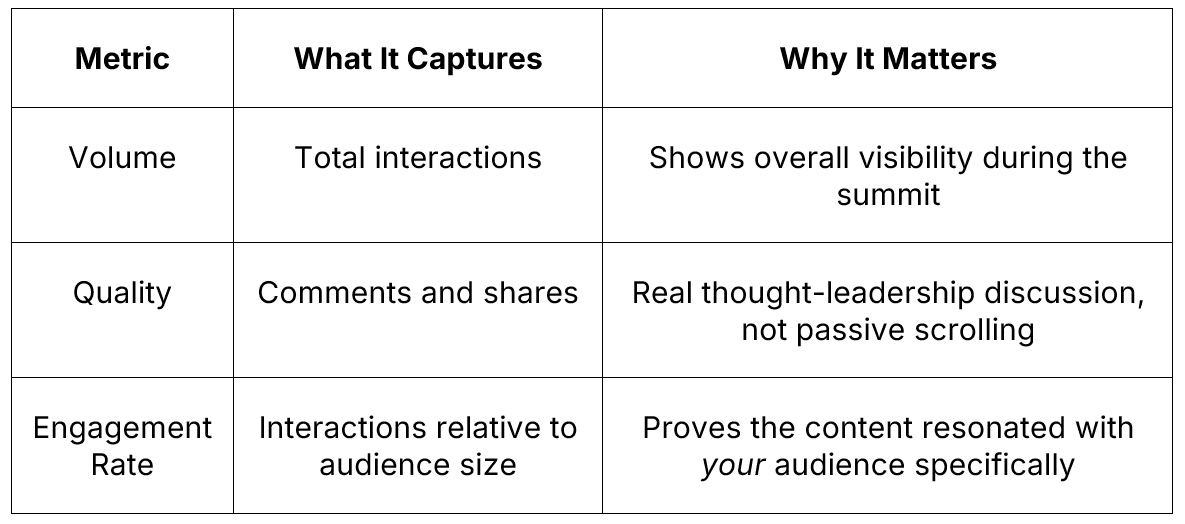
The formula itself is simple enough to keep on a sticky note: Engagement Rate = (Likes + Comments + Shares + Saves) ÷ Total Followers × 100
The work after the work
The summit ends, the badges come off, but don’t stop paying attention just yet.
Consolidate everything into a single post-event report and look specifically for the moments that moved a needle, a moment that caught your attention and that of your audiences, a spike in direct website visits, or whatever you’re chosen metric. That's the evidence that live coverage did more than perform well in the moment; it's what decides the course of the next summit.
Great live coverage, after all, is about knowing in the middle of a fast-moving session, exactly which ten seconds are worth keeping. Partner with us to turn live events into lasting Brand Impact. At TIC, we combine strategic planning, creative storytelling, real-time content production, and performance-driven social media marketing to help brands maximise the value of every live event.

Let's create communication that drives results!