

AEO Monthly News Updates: April 2026
 7 Minutes Read

Major Google Updates, AI Advertising Shifts & what Digital Marketers need to know. The latest edition of SEO last month is here, wrapped with everything that happened across the digital marketing landscape in April 2026. Let’s dive into the biggest SEO, PPC, AI, and social platform developments from April 2026.
Google Ads Experiments now Auto-apply winning results:
On April 1st, Google quietly introduced a major change to Google Ads Experiments. Previously, advertisers had complete control over whether they wanted to apply the winning variation after an experiment concluded.
Now, Google has enabled automatic implementation of winning combinations by default. This means advertisers running experiments may unknowingly push changes live unless they manually disable the “implement winning experiment” toggle.
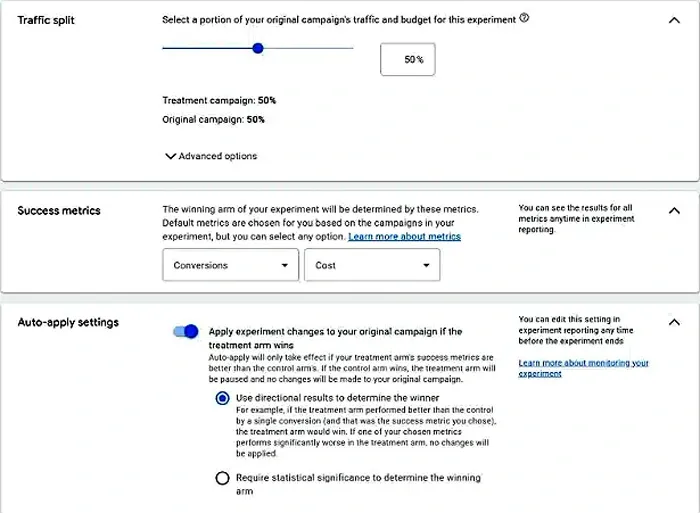
For PPC teams and agencies, this is a critical update. Every active and future experiment should now be reviewed carefully to ensure automation does not unintentionally affect campaign performance.
Sponsored Ads Now Appear Inside Mobile Image Search Results:
Google has officially started displaying sponsored ads inside mobile image search results. While ads appearing in more Google properties is no longer surprising, this rollout expands visibility opportunities for advertisers significantly, especially for eCommerce brands and visually-driven industries.
If users search for relevant keywords on mobile devices, your website images may now appear directly inside image-based search advertising placements. This creates additional traffic opportunities, but also means SEO and paid search teams must align image optimization strategies more closely than ever before.
Google Ads Introduces Reusable Generative AI Prompts:
Google Ads has added the ability to reuse generative AI prompts across multiple campaigns. Advertisers using AI-generated text assets can now copy and paste prompt instructions, including tone, style guides, and messaging frameworks, into other campaigns without rewriting everything manually. This update may seem small, but for large-scale PPC operations, it saves substantial execution time and improves campaign consistency across accounts.
Google Completed the March 2026 Core Update Rollout. On April 8th, Google officially completed the rollout of the March 2026 Core Update. According to industry observations, this update appears significantly more aggressive than the December update, with many websites across different industries reporting traffic and ranking losses.
Interestingly, there doesn’t seem to be a single pattern behind the impact. Multiple website categories and content types were affected, making diagnosis more complicated than usual.
For SEO professionals, this reinforces the importance of:
- Content quality improvements
- Better topical relevance
- Strong technical SEO foundations
- User-focused content structures
- Reduced dependency on low-value AI-generated pages
The update once again highlights that Google’s evaluation systems are becoming increasingly behavior and intent-driven.
Google Testing Swipeable Location Carousels in Search Ads:
Google Ads was also spotted testing swipeable location carousels underneath search ads. Businesses with multiple branches can now potentially showcase several locations simultaneously within a single ad experience. Instead of forcing advertisers to prioritize only one or two locations, this format improves visibility for franchises, retail chains, clinics, restaurants, and service providers operating across multiple cities. The feature is both interactive and highly practical for local advertising campaigns.
Enhanced Conversions Simplified in Google Ads:
Google has merged separate Enhanced Conversion settings into a single simplified toggle. Previously, advertisers needed to configure different settings for web conversions and lead-based conversions individually. Now, both functions can be managed through one unified control. For newer advertisers, this reduces setup complexity considerably and makes conversion tracking implementation more streamlined.
Google Cracks Down on Back Button Hijacking:
One of the most important policy updates in April came from Google’s spam policy team. Google officially confirmed that websites manipulating browser back buttons will now be considered spam. Some websites previously used JavaScript tricks to prevent users from returning to Google Search or Discover feeds, redirecting them to other internal pages instead. Google has now categorized this behavior as a spam policy violation. For publishers and SEO teams, this is a serious warning. Violating spam policies can severely impact visibility during future algorithm updates.
Google Brings Back the “Google Data Studio” name. In what many marketers considered the most satisfying update of the month, Google finally reversed one of its most unpopular branding decisions. After renaming Google Data Studio to Looker Studio years ago, Google has now restored the original “Google Data Studio” branding. No new feature was introduced.
Google Ads is preparing to retire Dynamic Search Ads (DSA):
The likely reason? Google wants stronger adoption of AI Max campaign types. DSA campaigns have historically been one of the most widely used automated ad formats. By phasing them out, Google is effectively pushing advertisers toward newer AI-driven campaign systems.
This reflects a broader trend across the advertising industry: platforms increasingly want automation and AI systems to control campaign execution. AI Mode Links May open in side panels Instead of new pages
Google also revealed a significant upcoming AI Mode behavior change. When users click website links inside AI Mode, pages may open inside a side panel rather than launching a completely new browser tab.
This creates mixed implications for publishers:
Potential Advantages:
- Brand visibility still exists inside the search experience
- Users can access website content faster
- Google may still count impressions and clicks
Potential Concerns:
- Reduced direct website traffic
- Lower engagement depth
- Publishers carrying hosting costs without receiving meaningful visits
The biggest question remains whether Search Console will properly report these interactions.
Microsoft made several major announcements throughout April 2026:
AI Max Comes to Microsoft Advertising. Microsoft launched its own version of AI Max campaigns, closely resembling Google’s AI Max framework. The structure, functionality, and automation approach are strikingly similar, showing Microsoft’s continued strategy of rapidly adapting successful Google advertising systems.
Microsoft Clarity now tracks AI Citation Visibility. Microsoft Clarity can now show which parts of your website content are being used inside AI-generated answers. This gives publishers deeper visibility into how AI systems interpret and surface their content. For SEO professionals, this could become extremely valuable for optimizing AI visibility and citation positioning.
CPC-Based Ads arrive in ChatGPT:
OpenAI also introduced CPC (Cost-Per-Click) advertising models. CPC campaigns now provide advertisers with more familiar and measurable performance-based pricing models. This move signals OpenAI’s intent to compete more directly with traditional advertising ecosystems like Google Ads and Meta Ads.
Google Analytics Introduces “Task Assistant”:
Google Analytics launched a new feature called Task Assistant. The tool helps users navigate account setup, campaign configuration, reporting workflows, and conversion tracking through guided steps.
While positioned as a beginner-friendly helper, many professionals believe the broader goal is to encourage more businesses to self-manage advertising campaigns directly within Google’s ecosystem.
AI Max Expands Into Shopping Ads:
Google has now introduced AI Max campaign support inside Shopping Ads as well. Until now, AI Max was largely focused on search advertising. Expanding it into shopping campaigns further reinforces Google’s aggressive push toward AI-first campaign automation.
Preferred Sources Now Available Worldwide:
Google has expanded its “Preferred Sources” feature globally across all languages. The system allows users to prioritize specific publishers and websites inside Discover and news-related experiences. This feature was previously limited to selected languages and regions, but it is now available worldwide. For publishers, this creates new opportunities to strengthen audience loyalty and recurring visibility inside Google’s content ecosystem.
Final Thoughts:
April 2026 clearly demonstrated one thing: the future of digital marketing is becoming deeply AI-centric. Google, Microsoft, and OpenAI are all aggressively restructuring search, advertising, commerce, analytics, and content discovery around AI systems. For SEO professionals, advertisers, and content creators, adaptation is no longer optional.
The biggest trends shaping the industry right now include:
- AI-first advertising automation
- AI-powered commerce integration
- Increased platform control over campaign optimization
- Reduced manual campaign management
- Greater importance of content quality and trust
- Expanding AI citation visibility
- New monetization models inside AI platforms
As these systems continue evolving, marketers who understand AI-driven discovery, structured content, and automation workflows will have a significant advantage. The industry is changing rapidly, and staying updated every month is becoming more important than ever.
At TIC, we see this shift as a major opportunity for brands to build stronger digital visibility through AI-ready SEO strategies, structured content, automation, and data-driven optimization. We, as industry experts, continue to help enterprises stay ahead in this rapidly evolving search ecosystem.
Let's create communication that drives results!