


How Google Discover Quietly Delivers Massive Traffic
 5 Minutes Read

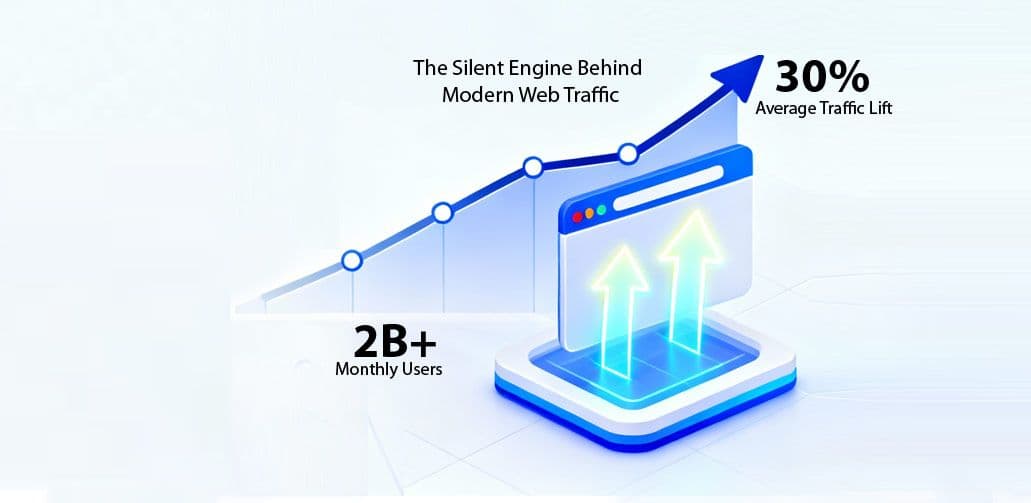
There was a time when getting traffic to a website depended entirely on SEO/AEO, backlinks, and paid promotions. But today, there exists a quiet and incredibly powerful channel, Google Discover, a feature that can deliver thousands of high-quality visitors without a single keyword typed.
The most fascinating part? Most users don’t even realize they’re “using” it. This article explores how Google Discover works, why “subscriptions” are not what you think they are, and how content creators can ride this wave by simply aligning with user intent.
The Subtle Magic of Google Discover
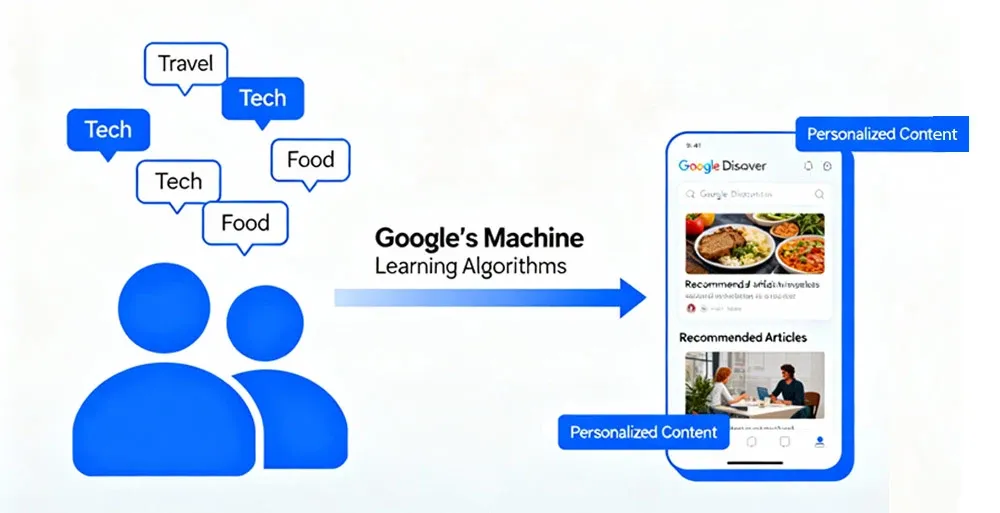 Imagine a user sitting somewhere in the United States, thousands of kilometers away from your country. They haven’t searched for you. They may not even know your website exists. Yet, Google Discover places your article right in front of them, as if it knows exactly what they want to read next. And that’s precisely how Discover works.
Instead of reacting to search queries, it predicts what each user might find useful, interesting, or relevant. The Google app on Android phones plays a major role in this. It silently observes patterns, topics opened, articles read, videos watched and then curates a personalized feed of content.
- No subscriptions.
- No email lists.
- No manual sign-ups.
Just pure “users interest”.
Why Does Google Discover Don't Depend on Traditional Subscriptions?
Google does provide a “Follow” or “Subscribe” option for topics inside Discover. But this isn’t a subscription in the old-fashioned sense. Users don’t fill forms or confirm emails. They simply tap once on a topic they want to explore more deeply. From that moment on, Discover starts surfacing:
- More articles
- More videos
- More updates
- More news
- More insights
All without the user lifting a finger. The system is fuelled entirely by user interest, not user commitment. The Role of Topic Relevance.
To thrive on Discover, your content must clearly answer:
- A fresh content
- A real question
- A real problem
- A clear topic
Google displays a “Follow” or “Subscribe” button only when it trusts that your page is truly aligned with a topic people care about. So, when a user clicks your article and sees that “Follow” button, it’s Google’s silent stamp of approval that your topic is:
- Well-written
- Clearly targeted
- Contextually relevant
If they tap that button, Discover will start showing them similar content, including yours, more frequently. Where Many Creators Go Wrong Most content creators assume Discover works like social media. Hence, they “Post more content. Push harder. Get followers.”
But Discover works differently. Here, clarity beats quantity.
- A vague article jumps around topics.
- A strong article stays committed to one intention.
If your content clearly addresses a specific question or problem, Discover understands it better, categorizes it better, and distributes it better. This clarity becomes your doorway into the user’s feed.
How to Make Your Content Discover-Friendly? The best part, It doesn’t require complicated SEO/AEO.
Just follow these simple principles:
- Present One Topic Clearly: Don’t mix multiple ideas. A focused topic helps Discover place your content in the right category.
- Answer the Core Question Early: Discover prefers content that gets to the point quickly and provides value immediately.
- Use Rich Media (Video or Audio) When Possible: Content with visually or audibly rich elements tends to perform better.
- Make Your Headlines Intent-Based: Headlines that match user questions perform exceptionally well.
- Keep Your Sentences Complete and Clear: Discover’s machine learning identifies content quality from structure and clarity.
When you follow these guidelines, Discover begins to understand the essence of your content, what it solves, whom it helps, and where it fits. And once that happens, your content begins appearing on feeds automatically.
The Future: Interest-Driven Discovery - Instead of waiting for users to search, platforms like Google Discover are proactively suggesting what they think users want next. When creators understand this shift, traffic no longer feels unpredictable. It becomes natural, organic, and almost effortless.
Following a topic on Discover is not a commitment. It’s a signal. And these signals shape the entire recommendation system.
Conclusion: Google Discover is not something you can “hack”, It’s something you can align with. If your content is clear, relevant, problem-solving, and structured well, Discover becomes a powerful distribution engine that brings your work to people who genuinely care.
- No email lists.
- No aggressive SEO/AEO.
- No complicated subscriptions.
Just consistent, high-quality content that speaks to the user’s intent. When you create with clarity, Discover does the rest.
At TIC, we help brands create clear, intent-driven content that performs strongly on Google Discover. From structuring topics to optimizing readability and relevance, our team ensures your pages align with what Discover prefers.
If you want your content to reach the right audience effortlessly, TIC can guide you with expert precision.
Some Useful Links:
#socialmediaservices #thoughtleadershipcontent #uxdesigningservices #websitedevelopmentservices #digitalmagazines #publications #casestudies #TICMumbai #abouttic #TICblogs #TICpodcasts #ourwork #ourclients #testimonials #contactus #careers #portfolio



Let's create communication that drives results!